After a Close NFL 2025 MVP Vote, What Do People Even Value in a Quarterback These Days?

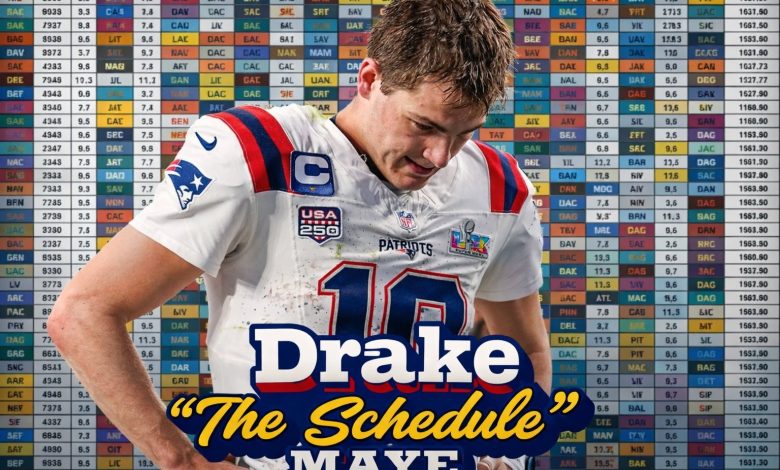
It was a tough week for Patriots quarterback Drake Maye after he came up short in becoming the youngest quarterback in NFL history to win a Super Bowl. A few days before that, Maye also finished as the runner-up for 2025 NFL MVP behind Matthew Stafford after the closest MVP vote since 2003 with Stafford getting 24 first-place votes to 23 for Maye. One vote made the difference.
In the end, Stafford edged out Maye with 366 total vote points to 361. While the MVP is a regular-season award that should stay that way, it’s impossible not to look at the 2025 NFL postseason as the biggest justification of an MVP outcome after Stafford again put on a passing clinic (in a high-scoring loss) against the same Seattle defense that embarrassed Maye in Super Bowl 60’s 29-13 offensive dud.
For the people, including myself, who argued that Maye’s regular-season stats were juiced by a New England schedule that featured a record 14 games against opponents with losing records as well as 11 games with teams that moved on from their head coach (that doesn’t even include two games vs. the Jets), we were vindicated weekly by Maye’s struggles in the playoffs against winning teams with strong defenses. He took 21 sacks and fumbled seven times in the postseason alone as his stats dropped like a rock across the board.
The schedule matters, but apparently not to all 50 MVP voters. Technically, the AFC East quarterbacks received 25 MVP votes to 24 for Stafford. In addition to Maye’s 23 MVP votes, Buffalo’s Josh Allen also got two first-place votes, so that just goes to show the favorable schedule the Bills and Patriots had didn’t deter half of all voters.
Maybe they’ll reconsider after the way the 2025 season ended. Or maybe not. Who knows anymore?
As I said at the start of the 2025 season, we’ve reached this conflicting point with quarterback analysis where it’s hard to tell what people actually value anymore at the position, let alone what would make that player the most valuable in the league.
At a time when we have more data available than ever before on quarterback play, it seems that some people want to whittle things down to one stat as myopic as touchdown-to-interception ratio that ignores over 93% of the other plays in a season. If they want something more advanced, some treat Expected Points Added (EPA) as the Holy Grail of Football Metrics when the truth is it has flaws and shortcomings too like every stat does.
Further complicating things, we’ve just had two seasons where complete teams with quarterbacks on the fringe of the top 12-15 in statistics won the Super Bowl after Jalen Hurts (2024 Eagles) and Sam Darnold (2025 Seahawks) rode dominant defensive performances in the big game. You’d have to go back to Joe Flacco (2012 Ravens) and Russell Wilson (2013 Seahawks) to find a pair that unheralded. Maybe even back to 1990-91 with Jeff Hostetler (1990 Giants) and Mark Rypien (1991 Redskins) as that Rypien comparison again shows up for Darnold.
The “rings” argument doesn’t hold up as well when you have to entertain that Darnold won one before any of his more famous 2018 draft classmates (Baker Mayfield, Josh Allen, and Lamar Jackson) even got to one, or that Drake Maye got to a Super Bowl in Year 2 while Allen and Jackson still haven’t been there after eight seasons.
The quarterback position itself is in a weird place with Patrick Mahomes coming off a torn ACL, Aaron Rodgers is 42, Allen’s turning 30, Jackson and Joe Burrow missed the playoffs after injury-plagued seasons, a sophomore slump of injuries for Jayden Daniels, C.J. Stroud is still chasing his rookie success, and Justin Herbert keeps flopping in the postseason. Few also seem to respect Jalen Hurts, the last quarterback to win a Super Bowl MVP.
Maybe it makes sense that a 37-year-old Stafford was able to win MVP, and that Stafford and a 44-year-old Philip Rivers, just five days after he ended a 5-year retirement, came the closest to beating Seattle in its final 10 games.
Throw in a season where passing yards per game (209.7) were at their lowest since 2006 due to a combination of injuries (only 11 quarterbacks started all 17 games) and the new kickoff rules shortening fields, and judging quarterbacks is harder than it’s been in many years.
The Pro Bowl is also 100% a sham that can no longer be taken seriously for anything. It already reached that status in 2022 when Tyler Huntley (Ravens) got credit for a Pro Bowl as a deep alternate after starting just four games. But they really went over the top in 2025 with Shedeur Sanders and Joe Flacco making the AFC Pro Bowl roster with Joe Burrow. Yeah, the Browns and Bengals both technically had two Pro Bowl quarterbacks for teams that finished a combined 11-23.
That’s why honors like the MVP award and the first-team All-Pro quarterback selection are very important for legacies and determining who was the best quarterback in the league that year. Yet the 50 people who vote on these honors for the Associated Press have just recently started to challenge the voter norms we’ve observed for decades that generally did a good job with these honors.
On the one hand, new valuations for a league changing before our eyes makes sense. On the other hand, inconsistently applying those standards for one player in one year and ignoring them in the next is creating the most toxic discourse the award has ever had as voters are now being accused of stark favoritism, bias, or just trying to go against the grain to make a name for themselves.
Full disclosure: I am not an Associated Press voter, but I’ve voted on awards and honors for the PFWA and have been researching quarterbacks since 2003 and writing about them since 2009. I am someone who believes the MVP should always go to a quarterback barring extreme circumstances like in 1986, 2000, or even 2021 (Team Cooper Kupp). But seeing some recent developments with how quarterbacks are discussed, I see some real issues and wanted to compile some thoughts going into this offseason.
What’s the issue, how did we get here, and what can be done about it going forward?
Table of Contents
What’s Going on with the Modern NFL Quarterback?
This section could be a 5,000-word piece all to itself, but I’m going to try to be brief (if 1,500 words is brief) about what is going on with the modern quarterback and why play at the position appears to be down.
Part of the reason MVP discourse has gotten so toxic is that we’ve only had one cut-and-dry MVP in the last five years, and that was Patrick Mahomes in 2022. He checked every box with the best volume stats (most passing yards and touchdowns for No. 1 offense/passing offense), best efficiency stats (led in QBR, EPA and success rate), the Chiefs had the No. 1 seed with a 14-3 record, he was consistent and clutch (four game-winning drives), and he had the narrative of doing this all after the team traded his best wide receiver (Tyreek Hill) that offseason.
Piece of cake, and Mahomes ended up getting 48-of-50 first-place votes that year.
But that type of MVP season is rare just as it is rare to see 1984 Dan Marino, 1989 Joe Montana, 1994 Steve Young, 2004 Peyton Manning, 2007 Tom Brady, 2011 Aaron Rodgers, 2013 Peyton Manning, 2018 Mahomes, or 2019 Lamar Jackson duplicated given their statistical domination.
Most of the time, you’re left with a race won by a quarterback who had really good numbers for a team that won a lot of games, and that’s good enough. The problem is we haven’t seen too much of that in the last five years, so you’re left with seasons where the odds keep fluctuating between several household names before someone finally wins it with a season that would be hard-pressed to rank up there with the best of the best.
If you look at the top seasons in QBR at ESPN since 2006, Mahomes in 2022 (79.0) comes in at No. 16 as the only season from the last five years in the top 26 seasons. We’re not getting those slam-dunk MVP quarterback seasons anymore, so people are scrambling for reasons to prop up other players.
Why are quarterbacks struggling to turn in more consistently dominant seasons? That’s a question with a lot of answers.
NFL offenses were certainly getting the best of defenses before and after COVID in 2018-20, but Super Bowl 55 between the Chiefs and Buccaneers served as a watershed moment for the league. Todd Bowles’ defense held the Chiefs without a touchdown in a 31-9 beatdown by playing a lot of two-high safeties and avoiding blitzes. If you can take away the big plays and get pressure by just rushing four, you are golden in this league, and that has been copied and become a bigger part of defensive strategy around the NFL.
Note: Come back next week when we’ll unveil a new metric for quarterbacks with stunning results.
That set the league on a new path for 2021-25, and we’ve seen other developments that have hampered quarterback play around the NFL:
- Veterans Retired: A lot of legendary passers from the golden era have retired such as Drew Brees, Ben Roethlisberger, Tom Brady, Matt Ryan, and Philip Rivers (before he came back at 44 five years later). Replacing them has been hard for most teams, and players still hanging on like Aaron Rodgers and Russell Wilson aren’t what they used to be. It also doesn’t help that Andrew Luck (2019) retired early and Deshaun Watson destroyed his career with off-field transgressions, or they’d still be battling it out in the AFC South.
- Coaching Volatility: We’ve seen 10 new head coaching hires in 2026 alone along with 21 new offensive coordinators, so coaching volatility is very high as not many coaches have much tenure with their current teams. Poaching a hot-shot coordinator early is one of the easiest ways to get a new coach, leaving their old team hampered at times (see 2025 Eagles after losing Kellen Moore).
- Bad Drafts: Some quarterback draft classes have been strong like 2020 and 2024, but 2021 was a dud where Trevor Lawrence is as good as it gets, 2022 was always a bust (Kenny Pickett in the first round!?), and the jury is still deliberating on 2023 but it’s not looking great (Bryce Young, C.J. Stroud, Anthony Richardson, etc.).
- College Offenses Not Preparing Players for the NFL: With the rise of spread/Air Raid/RPO offenses in college football, many players are not getting developed for skills they’ll need at the professional level, including how to read through progressions and take snaps from under center instead of purely shotgun. This has also extended to offensive tackles not being built for success as they’re not used to holding blocks for longer or working on the power stances they’ll need to deal with NFL edge rushers.
Another issue is the salary cap. When the Chiefs reset the market in 2020 by signing Patrick Mahomes to a 10-year deal worth $450 million, they were actually getting a bargain. Today, 14 other quarterbacks are earning at least $45 million per year, and 11 are above $51M, including some less-than-stellar players like Tua Tagovailoa ($53.1M) and Trevor Lawrence ($55M).
Even with the salary cap always increasing, it’s become very expensive to hold onto a quarterback, a good wide receiver (or two), and then an offensive tackle and edge rusher all at the same time now. Teams eventually get penalized for finding good talent at the most important positions, and you’re left with a roster of stars and scrubs, which can have a major effect on performance as we’ve seen with the teams that paid the quarterback and then struggled to hit darts in the draft to replenish the roster with young talent.
The Chiefs are seeing the effects of relying on an aging Travis Kelce and Chris Jones while their post-Hill wide receiver moves have largely failed due to bad players (Kadarius Toney), bad decisions off the field (Rashee Rice), bad injury luck, and some flaws in the coaching staff like figuring out what to do with Xavier Worthy’s speed. This is to say nothing of the offensive line issues they’ve had over the years, but we have all offseason to talk about the Chiefs’ fall from grace in 2025. Still, their lack of offensive domination in 2023-25 is a big part of the story of the league’s offensive decline.
We’ve also seen a lot of the air taken out of the ball in Buffalo after the Bills let Stefon Diggs go in 2024 and haven’t really replaced him with another good wideout for Josh Allen, who they tried to get to avoid turnovers in a safer offense. That still didn’t work out in 2025 with five giveaways in Denver in another playoff loss, and while they fired Sean McDermott, they promoted Joe Brady, so how much will really change in 2026?
Lamar Jackson was injured in three of the last five seasons and was first-team All-Pro in the other two. Of course, his 2023 MVP is highly debated, but we’ll get to that later. Meanwhile, Joe Burrow has also been injured, and the defense wasn’t good enough in 2024 to get him to the playoffs even when he stayed healthy.
The Chargers weren’t able to put a decent defense around Justin Herbert until 2024, then they gave him one good wide receiver (Ladd McConkey). Then they found him better receivers in 2025 only to lose both starting offensive tackles to season-ending injuries as well as an injured backfield, putting it largely on him again. Other talented quarterbacks haven’t been properly supported with a good defense either like Dak Prescott, Jared Goff, and Jayden Daniels (injured a lot in 2025).
But there is a 1980s/90s-style throwback going on where the AFC had the best quarterback talent, but the NFC had the superior teams and coaching.
Today’s NFC has Sean McVay and Kyle Shanahan, who have built the coaching trees that keep supplying so many teams with their next head coach. Should we add Mike Macdonald in Seattle to that group already with his success in two years? The NFC North coaches are also respected, which is why you feel the NFC can coach around quarterbacks like Sam Darnold, Jalen Hurts, Brock Purdy, etc. to win Super Bowls with complete teams while the AFC teams rely on their top-tier quarterbacks to cover their cap-constrained roster flaws.
One AFC team trying to build with the NFC model is Denver with Sean Payton mentoring Bo Nix, who has an elite offensive line and defense. Unfortunately, he broke his ankle on a bad play call on the drive that led to his first playoff win against Buffalo, so we had the displeasure of watching Jarrett Stidham vs. Drake Maye in a 10-7 suckfest (even before the snow) with the Super Bowl on the line.
Reality: It’s the NFC quarterbacks people have trust issues with who are playing with all those wonderful toys (Saquon Barkley, Christian McCaffrey, Jahmyr Gibbs, Jaxon-Smith Njigba, Puka Nacua, etc.) in innovative, fresh schemes while the best AFC quarterbacks are just trying to stay upright, hoping their best weapons don’t fall off a cliff from old age (Travis Kelce, Derrick Henry), don’t end up on TMZ (Stefon Diggs, Rashee Rice), or don’t become memes in Cam Newton videos (Buffalo’s Cookie Man).
That is the modern quarterback landscape in a nutshell, and that’s why it’s a hard position to discuss right now. Not that that will stop any of us from trying.
The New Distinction Between All-Pro and MVP
With so many NFL offenses moving towards a running back by committee approach in the late 2000s, the days of a running back winning MVP have almost become extinct. Since 2007, Adrian Peterson (2012) is the only running back to win MVP; everyone else has been a quarterback, so you can say MVP has turned into a quarterback award.
More specifically, an award for a quarterback with great stats on a team that won a lot of games. Historically, the first-team All-Pro (AP1) selection at quarterback and MVP have had almost perfect correlation in going to the same player.
One of the few times that wasn’t the case was 1987, a strike season with three replacement games, where voters wanted to give the award to someone on the San Francisco 49ers, but quarterback Joe Montana (18 votes) ended up sharing votes with Jerry Rice (30 votes), allowing Denver quarterback John Elway to win MVP with 36 votes. Montana was still named the AP1 quarterback that year despite Elway getting the MVP.
Then in 2003, Peyton Manning and Steve McNair tied for MVP, so McNair technically won MVP without being AP1 (Manning), but that was also a tie. We never had a non-strike season without a tie at MVP where a quarterback won MVP without being first-team All-Pro until 2024.
That’s when everything changed with Josh Allen getting the nod to the surprise of many when you consider Lamar Jackson received 30 votes for AP1 to just 18 for Allen. But from the same group of 50 voters, Allen won MVP with 27 votes to 23 for Lamar, meaning Allen gained nine votes and Jackson lost seven votes, an unprecedented outcome.
But that seems to be the new precedent as the same thing nearly happened in 2025. For the AP1 selection, Matthew Stafford won with 31 votes to 18 for Drake Maye. But when the MVP vote came out, Stafford’s total shrunk to 24 while Maye went up to 23, just missing one more vote to pull off the upset for the second year in a row.
Again, this goes against past precedent where the All-Pro quarterback usually gained a couple of MVP votes, or he never lost more than four votes. But we’ve seen Stafford and Jackson lose seven voters in each of the last two years.
It’s not unprecedented for the standards of an award to change. Starting around 2019, voters started making Offensive Player of the Year an award that goes to a wide receiver or running back who usually leads the league in yards. They stopped giving OPOY to quarterbacks, though that could have something to do with the lack of worthy quarterback seasons. Then again, Lamar Jackson throwing for 36 touchdowns and rushing for over 1,200 yards should have won OPOY in 2019 in any sane vote, but wideout Michael Thomas edged out Jackson in a close 19-17 vote.
The best quarterback gets the MVP, and the best wide receiver/running back gets OPOY. Fair enough. But what about the AP1 quarterback? That has long been synonymous with the “best quarterback” that season. Given quarterback is the most important position, the most valuable position, how could the best quarterback not be the most valuable player too?
For decades, that was almost always the case. But in 2024, just enough voters – we identified some of them as Emmanuel Acho, Chris Simms, and Dan Orlovsky – decided they were going to switch their vote from AP1 to MVP on a new definition of “value” while leaving the AP1 as more of a “best stats” award. Orlovsky tried to defend this voting quirk on ESPN and it didn’t go too well for him:
Ultimately, it sure felt like some voters wanted to find a way to make sure Allen, considered an elite quarterback since 2020, got one MVP before they gave Lamar three of them given his playoff struggles. Classic voter fatigue mixed in with some “participation trophy” and “lifetime achievement award” practices. CBS’ Tony Romo, who did not have a vote, basically laid it out in late December that the tiebreaker was Allen not having an award while Lamar has two.
Make no mistake about it, there was also some backlash to Jackson’s 2023 MVP win when he clearly didn’t have the usual stats of an MVP season. Had Jackson not won the MVP in 2023, he would have likely ran away with it in 2024. Enough voters saw this as a way of giving both quarterbacks some kind of honor, and evening up the MVP count between 2023 and 2024 even though Allen was always a distant fifth-place finisher on total points in 2023 despite getting the lone first-place vote that Jackson did not receive.
So, why did this new dichotomy happen again in 2025 with seven voters going towards Maye for MVP? If anything, Stafford had the “lifetime achievement award” angle going at 37 years old without any awards. Maye was the 23-year-old kid who “will have many chances” down the road.
That one’s a little harder to dissect since it doesn’t have the rivalry or history that Jackson vs. Allen had in 2023-24. Still, it comes back to people arguing in bad faith or just using bad arguments period.
Debunking the Bad-Faith MVP Arguments on Drake Maye vs. Matthew Stafford
At the end of the day, Matthew Stafford is your 2025 NFL MVP and All-Pro quarterback, so the voters got it right. Just enough of them, at least. But the fact that it was so close is interesting, and I would venture to say that had the vote been cast after the postseason, Stafford may very well have won in a landslide.
But let’s look at what some of the people who voted on this award had to say about it.
Albert Breer Switches MVP Vote to Maye
One of the few voters to admit this year to switching their AP1 vote from Stafford to Maye for MVP was SI’s Albert Breer. He explained it here:
“And a quick note: Yes, I did vote Stafford first-team All-Pro and Maye as MVP. I felt like, at the time, there was no one playing quarterback at a higher individual level than Stafford, and his performance in the playoffs only reinforced my feelings on that. But I saw Maye’s value as greater, given how he elevated a team that won four games a year ago, and had a completely revamped offense around him (four new starters on the line, plus new guys like Diggs, Henderson and Mack Hollins in the skill group). Is that a cop out? I don’t know. But I think both guys were deserving in both categories.”
First, Breer already hints that splitting the honors among the two quarterbacks may have been a copout. Hard to see it as anything but. However, his reasoning for Maye having more value is not a good argument for MVP. Instead, he just made the case for Mike Vrabel to win Coach of the Year, which he did in another narrow voting outcome for 2025.
It’s understandable to give Maye credit for elevating a team that won four games in 2024. The problem is Maye started most of those losses as a rookie, so he was part of the problem last year. It doesn’t make much sense to give credit to someone for getting better from a mess they were in partly of their own doing. That’s why Vrabel had a case as he wasn’t the one who went 4-13.
Also, adding new players on offense who are better than what you had isn’t necessarily a way to credit the quarterback. They gave him a better No. 1 wide receiver in Stefon Diggs who caught almost everything thrown his way as the Patriots had one of the lowest dropped pass rates in the NFL. That helped as did the long touchdown runs TreVeyon Henderson broke as a rookie.
That offensive line that was skewered in the playoffs was also ranked No. 6 by some metrics in blocking in the regular season, so having new starters there wasn’t a bad thing either.
Dan Orlovsky (Stafford) and Mina Kimes (Maye) Vote
Several of ESPN’s top on-air personalities have a vote, and they have clips discussing it late in the season that have gone viral. Dan Orlovsky has notoriously been at the center of the last few MVP races, and there are people who have issues with both Orlovsky and Kimes having ties to certain teams that could lead to bias in how they vote.
For instance, Orlovsky was a teammate of Stafford’s in Detroit, and that does lend itself to a legitimate claim of bias. At the same time, you’d almost have to ban any former player or coach from voting if you’re going to avoid these instances, because how is it any different from someone like Tedy Bruchi (former Patriots linebacker) voting for Vrabel or Maye for the Patriots? Orlovsky has also been a big Josh Allen fan and does media spots for the Bills, but he is not a Bills employee as some have falsely claimed.
Orlovsky is all over the place as he’s also found ways to hype up Joe Burrow over the years as well. As for Kimes, she’s done preseason games for the Rams but is not a team employee. She’s actually well known for being a Seahawks fan, which has some questioning if she’d vote against a division rival that was her team’s biggest obstacle to the Super Bowl.
Regardless of their intentions, let’s focus on the things they actually said publicly, which is a lot (some would say too much) in Orlovsky’s case. For the 2023 MVP race, Orlovsky said he voted for Jackson because of the hidden stats and value he brought to the team. It wasn’t about the overall stats he had that year, one in which Dak Prescott and Brock Purdy had better numbers but didn’t have the high-quality wins.
Fair enough. Then when it came time for the 2024 MVP vote, Orlovsky more or less stuck to his guns about the “play style” of Allen providing “hidden value” and “who you do it with matters” after Jackson was handed Derrick Henry. He was mostly consistent from 2023, but one big mistake in the clip we shared earlier was when Orlovsky said “who you do it with and who you do it against.”
Well, in that case, why would you vote for the guy (Allen) who was 2-3 against other playoff teams while Jackson was 7-3 against playoff teams, tied for the most such wins in a season in NFL history? Not to mention Jackson outplayed Allen in a 35-10 game earlier that season.
This is why people get frustrated with Orlovsky, because a year later in the 2025 MVP race, he was all in on the schedule difference between Maye and Stafford. He even posted one of my tweets, word for word, on the record number of touchdown passes Stafford threw against teams with at least 11 wins (20) at a time when Maye had zero.
Granted, you could make the argument the schedule was a significant factor and difference between the seasons Maye and Stafford had, so you have to bring it up. But it was still a fairly sizeable difference in schedule last year between Allen and Lamar too, yet that didn’t seem to cross his mind then. That’s the inconsistency with applying these MVP standards to each season.
Orlovsky vs. Kimes Breakdown
On February 5, hours before we found out Stafford officially won MVP, Kimes and Orlovsky debated on First Take the race between the two quarterbacks. It cuts off before the end, but most of the video is Kimes arguing for her Maye vote while Orlovsky obviously had Stafford.
Both think they’re right, but while I wish I could have seen the whole thing, I’m going to explain why neither got to the heart of the argument with the right numbers to inform the audience. I also said last Thursday this was going to look worse after Sunday night’s Super Bowl when Maye faced the Seattle defense that Stafford torched twice on the road.
First, the one point made by Kimes that I can’t refute as a Stafford voter is that Maye wipes the floor with him in rushing value. Stafford had one successful run in the entire regular season, and it wasn’t even for a first down. I like to think Stafford cuts into that gap by having more passing volume and taking fewer sacks, but rushing is definitely a big reason why Maye finished better in a stat like QBR, which adores rushing.
Where Kimes’ argument begins to fall apart is when she tries to gloss over the schedule difference between the quarterbacks by inferring they played a fairly close set of pass defenses. She is likely referring to these numbers by ESPN’s Bill Barnwell that never passed the sniff test for me given we know Stafford has played several more games against the very best defenses this year than Maye did.
In a 32-team league where everyone plays 17 games with certain schedule overlapping, it’s pretty hard to generate a much tougher average if you just average out where each opponent’s defense ranked. Still, I took the time to use six different metrics on defense to judge where all 24 quarterbacks who started at least 12 games (min. 10 passes) fared in their average opponent on defense. The results show Maye had clearly the easiest schedule of defenses while Cam Ward had the hardest (poor rook) and Stafford had an above-average set:
Maye had the easiest set of defenses in 5-of-6 metrics as well as the seventh number that averaged the six together. It’s hard for anyone to argue he didn’t face the easiest group of opposing defenses, and it’s also not logical to dismiss the weak offenses the Patriots played either. It’s easier to play offense if you don’t have to score a lot of points to win as the Patriots routinely didn’t have to do in 2025. That’s what playing losing teams that are often weak on both sides of the ball can do for you.
Then Kimes tried to use the “common opponents” argument, which really blew up in Patriots’ fans and Maye MVP voters’ faces all postseason. Orlovsky could have been much stronger on that point by pointing to the playoff games, even before Sunday’s Super Bowl, by bringing up how Maye fared against Houston compared to Stafford.
Because when you add the final numbers together for the playoffs, including Maye’s Super Bowl and Stafford’s three games against Seattle’s No. 1 scoring defense, Stafford’s numbers best Maye’s now with almost a full half-yard edge in ANY/A, a stat that doesn’t even penalize Maye for his absurd 10 fumbles in these eight games:
The point Orlovsky should have been hammering home, besides Stafford’s efficiency coming against a much tougher schedule on more volume, is that the more these quarterbacks had to play common opponents, the worse the numbers got for Maye in relation to Stafford, who didn’t have a lot of problems with the Texans, Seahawks, Jaguars, Eagles, etc. this year.
The playoffs just proved that Maye’s historically easy schedule was crucial in his regular season stats, because every area he excelled at there saw him fall apart in the postseason. He went from completing 72.0% of his passes to just 58.3%. His 77.1 QBR dropped to an abysmal 40.0, and that’s even adjusted for the tough defenses faced (31.0 raw QBR). Then the real kicker, his EPA went from +151.2 in the regular season to -41.2, the worst in any postseason in the NGS era (since 2016) per NFL Pro.
The weather argument is also a lot of bunk as his numbers accumulated in 2.5 quarters in Denver before a snowflake fell were putrid and on par with how terrible his numbers were through 46 minutes of the Super Bowl when he was getting shutout in clear California skies.
It is also clear from Kimes-Orlovsky debate that we can’t agree anymore on the right metric to judge an overall offense or defense. She refers to the Patriots as the No. 23 defense because she used DVOA when all six metrics I used above have the Patriots as 15th, 11th, 10th, 9th, 10th, and 11th, so you tell me who’s using the right number here.
Then when she refers to the Rams as a top-five defense after calling the Patriots No. 23, Orlovsky soon jumps in saying the Bills were the toughest defense that Maye faced and they were ranked 12th. I assume the ranking Orlovsky used is team points allowed, which doesn’t exclude if Josh Allen throws a pick-six or anything like that.
Alas, anything directly involving real points is a step in the right direction, because last I checked, not one game in NFL history has been decided by DVOA or EPA. This has long been a pet peeve of mine as anyone using DVOA instead of the actual points allowed is missing the point of the game. Bill Belichick was the master of bend-but-don’t-break defense to the point where he broke DVOA for two decades with elite scoring defenses despite giving up a higher success rate of plays than you’d expect. Maybe Vrabel is following his footsteps in that department.
But it is so misleading to suggest Stafford had the support of a top-five defense while the Patriots were just 23rd in the regular season when these facts are true:
The Rams allowed five game-winning drives (three comebacks) in the fourth quarter/overtime, including the first game in NFL history where a team scored a 2-point conversion to win in overtime in the game that decided the No. 1 seed in Seattle.
The Patriots were 9-1 at saving a one-score lead in the fourth quarter, only losing to Buffalo in a game where Maye had a season-low 155 yards passing.
The Rams allowed at least 24 defensive points in six games in the regular season (two more in the playoffs) compared to just two for the Patriots.
Sure, that’s cool the Rams beat up on Baker Mayfield with a bad shoulder in prime time, or roughed up the Baltimore offense that was starting Cooper Rush instead of Tyler Huntley for some dumb reason. But the Rams clearly regressed on defense starting in the Carolina game, and they absolutely cost Stafford multiple wins in a way Maye did not experience this year.
Hell, just stop Sam Darnold from driving for 8 points in Seattle and have your kicker actually make a game-winning field goal in Philadelphia instead of seeing it blocked for a touchdown and I’m not writing any of this as the Rams would have been a 14-3 No. 1 seed with two more game-winning drives on Stafford’s resume. Maybe even a Super Bowl ring to go with MVP.
But here we are, entertaining the lesser QB for MVP because he went 14-3 against a far easier schedule and didn’t have Puka Nacua. Yet, notice that in Kimes’ brief mention of the weapons, she doesn’t get into anything about how the Patriots and Rams had almost identical numbers in air yards and YAC yards. If the receivers are so much better for the Rams, why doesn’t it show more in the YAC? Why did they drop more passes than the Patriots did too? People always get caught up on names with receivers and not how they are playing for the quarterback.
But after watching Maye implode in the Super Bowl against the defense Stafford was the best at facing this year, I can only hope if there’s ever another MVP race that comes down to two candidates with such a stark difference in schedules and track record, people will remember this outcome and go with the guy who got it done at higher volume against the tougher slate.
Not the guy who lit up the Jets (36 touchdowns, zero interceptions all season) for five touchdowns the same month that Trevor Lawrence had six and Mitch Trubisky had four against them. You can pretend your favorite flavor of EPA accounts for the joke that was the 2025 Jets defense, but it really doesn’t.
The schedule matters more than ever. In the 17-game era with 14 playoff teams, we have seen some very imbalanced schedules too. Teams that used to finish 8-8 can finish 9-8 now, a winning record. That’s helped lead to some records in just five years with this new format:
- Three teams in 2023 (Ravens, Titans, Bengals) tied the 1925 Chicago Bears for the most games in a season (14) against a team with a winning record.
- That’s because the 2023 AFC North became the first division since World War II to have four teams with a winning record, something the 2025 NFC North matched.
- The 2023 Ravens (10) and 2024 Ravens (9) have the top two seasons with the most wins against winning teams in NFL history.
- The 2024 Chiefs and Ravens tied the 1997 Packers and 1998 Jets for the most wins against playoff teams (7) in a season in NFL history.
- The 2024 NFC North became the first division to have a second-place team with 14 games (Vikings were 14-3, Lions were 15-2).
- The 2025 NFC West became the first division to have three teams with at least 12 wins.
- The 2025 AFC became the first conference to have five teams with at least 12 wins.
Some teams have hit the schedule lottery in recent years, drawing the two weakest divisions by chance. Guess who that’s been in 2024-25? Yep, the AFC East as the Patriots (10), Bills (11), and Dolphins (12) have played the fewest games against teams with winning records in the 2024-25 seasons. Meanwhile, teams like the Ravens (league-high 22 games), Chiefs (19), and Bengals (19) have played some of the toughest schedules.
The teams don’t get to pick their schedule, but as voters, people should be able to use that in their analysis of the season. For the people who vote on this stuff, I’d expect better than overrating the value of another AFC East schedule merchant who played in an offense that purposely limited their attempts to maximize their efficiency. Not “having a 1,000-yard receiver” because you didn’t or couldn’t throw enough passes to any one guy is not what MVP should be about.
We can be better.
Sam Monson’s Justin Herbert MVP Vote: Right Idea, Wrong Candidate/Year
Real quick, I just wanted to note the one very controversial first-place MVP vote of Justin Herbert. It was made by Sam Monson (you may recall him from PFF for many years), and he explained it on Twitter/X to the type of negative feedback you’d expect:
Without even being snarky or joking, I’ll say that’s stunning and brave. It also might never happen again where someone goes out on a limb to think outside the box given rabid football fans have doxxed and sent death threats to Sam just because he thought a quarterback who absolutely should have been top five in a weakened MVP race was the right pick. People really suck out there, and I don’t just mean the backup linemen who tried to protect Herbert this year.
The fact is Monson voted for Herbert, Stafford, and Maye as his top three, so short of voting Maye No. 1, his vote did not actually cost Maye the MVP as some suggested. The math doesn’t add up as Stafford still won by 5 points and he had him second.
The people Maye fans should be blaming are the two lost souls who will remain in anonymity if they know what’s good for them that voted for Josh Allen in a year where he had some horrific losses and James Cook won the rushing title. Now that’s a waste of two votes.
While I disagree with Herbert as No. 1, I like that it’s not a pure stats argument. After all, that’s what people we reusing for Lamar in 2023 and Allen in 2024 when they led the league in almost no category statistically. God forbid someone actually make the non-stat argument for a quarterback who still won 11 games in a tough division and did face an absurd amount of pressure while playing through hand surgery.
However, while I liked the idea of where Monson was coming from, I do think there has to be some decent level of stats put up by the quarterback to still win MVP, and Herbert just wasn’t there this year. The offense was average at best, he had some rough games (loss to the Giants stands out), and he was 13th in QBR (60.6), a stat that is accounting for his career-best rushing value he had.
Oddly enough, a better candidate to apply this 2025 Herbert logic to would have been Mahomes in 2024, who finished a distant sixth in the MVP vote with just 31 vote points. That one didn’t make sense to me as that was the perfect example of a quarterback who dragged a flawed team to a 15-1 record in the games he played with an attempt at a three-peat on the line.
Mahomes didn’t play a single game with his top two wide receivers together because of injuries to Hollywood Brown then Rashee Rice. He was trying to get by with an old Travis Kelce and a rookie Xavier Worthy against a tough schedule, he had four different left tackles, and he led seven game-winning drives and was money in the clutch.
To me, that’s the type of season you could argue for MVP despite the stats only showing he was 8th in QBR and 5th in total EPA. His value was immense that year, and if there’s ever an argument for what happens if you take that player away, well, we got a taste of that at the end of 2025 and it’s downright dreadful for the Chiefs.
But I applaud Monson for taking the chance on Herbert even if I don’t think I could possibly have ranked him higher than third in 2025 for MVP. Still, it does show some hypocrisy that people would complain about it being a stat-only focused award when someone did think outside the box to really capture the idea of value and elevating a team to the playoffs.
And again, the two Allen voters made the worst votes of the year.
What Voters Should Consider for Quarterback Honors Going Forward
You don’t have to agree with all of my takes on quarterbacks, but you cannot dispute that I have had a consistent value system for what I deem to be the most important indicators of elite performance at the most important position, and I have been applying them consistently going back to 2009 when Peyton Manning was a clear choice over Drew Brees.
In the ideal season, the MVP would go to the quarterback who:
- Leads a playoff team that wins 11+ games (no 9-8 wild cards)
- Leads a top 5 offense in yards and points per drive
- Ranks highly in key passing stats (volume of yards and touchdowns with minimal turnovers) and efficiency metrics (success rate, YPA, QBR, EPA/DB, etc.)
- Does not have an elite running game (excluding the quarterback’s own rushing contributions)
- Does not have an elite defense
- Does not have elite starting field position
- Played a schedule that was not bottom tier
- Led multiple game-winning drives (not just a front-runner on a loaded team)
- Had multiple quality games against good opponents
- Elevated his teammates instead of new teammates elevating him (a la Jalen Hurts getting A.J. Brown in 2022)
- Not a sack magnet
- Didn’t miss more than two games to injury (helps if the team wasn’t good without him)
- Didn’t pad stats with 1-yard quarterback sneak touchdowns or a lot of 1-yard touchdown passes of the easy variety (early downs, play-action, wide open receivers, etc.)
That sounds like a lot, but it’s actually been done multiple times by the likes of Peyton Manning, Aaron Rodgers, Dan Marino, Matt Ryan, Rich Gannon, Mahomes, and even Brian Sipe and Ken Anderson.
It may indeed be getting harder to pull this off in today’s NFL when some of the best offenses are building around the run, beefing up the offensive line, and letting the quarterback turn into a play-action merchant that’s not that hard to replace as the 49ers showed they could survive for half a season with Mac Jones this year even without the Avengers on offense.
But these are some other tips I think make for better judgments of quarterbacks right now:
- Focus on drive stats over raw totals since the game is changing and some teams don’t have as many possessions because of long drives, fourth-down decisions, or their defense can’t get off the field on third down. It’s the closest thing we have to Offensive/Defensive Rating in the NBA where you’re accounting for pace.
- Use a variety of stats (i.e. don’t just look at EPA without looking at success rate, blitz/pressure rates, QBR, etc.)
- CPOE is a pretty good stat at identifying poor quarterback play but a poor metric to judge top quarterback play, unless you want a stat that generally values Derek Carr and Kirk Cousins more than it does Patrick Mahomes and Lamar Jackson, who are better at manipulating defenses with their eyes and legs to create wide-open spaces for their receivers that they get dinged for throwing to as “easy” completions.
- September counts too; don’t just overemphasize late-season games in prime time (Drake Maye scoring 13 points at home to the Raiders was relevant; it gave Denver the No. 1 seed).
- More emphasis on how a quarterback does in the big games, less emphasis on when he throws eight touchdowns against the two defenses in his division that finish 30th and 32nd in points and win seven combined games (yes, that’s a shot at 2023 Dak Prescott).
And after 2025, don’t ever forget to compare the schedule. The NFL is about who you play, when you play, and where you play. But it’s who you play first and foremost, which is why Stafford could give the Seahawks all they could handle a few times and the Patriots were probably just in the Super Bowl because Bo Nix broke his ankle.
We’ll come back with a new quarterback metric next week I’m calling PBJ.
Related Articles:
- Lessons from the 2025 NFL Season, 2026 Storylines, and the Early Super Bowl 61 Odds
- Scott’s Seven NFL Picks: Super Bowl 60
- Super Bowl 60 Preview: Seattle Seahawks vs. New England Patriots
- Sam Darnold, the Patriots, and the Curse of MetLife Stadium (A Super Bowl 60 Story)
- The Worst Super Bowl Teams in NFL History: Are the 2025 Patriots in the Mix?
- The 2026 NFL Coaching Cycle: Grading New Hires and the Best Choices to Fill the Final Openings
- 2025 AFC Championship Game Preview: Bizarro AFC Leads to Drake Maye vs. Jarrett Stidham
- 2025 NFC Championship Game Preview: Rams vs. Seahawks Is Super Bowl LX Two Weeks Early
- 2025 AFC Divisional Round Preview: Is This Finally the Year for Josh Allen and the Buffalo Bills?
- 2025 NFC Divisional Round Preview: The Greatness of the NFC West on Full Display
- 2025 AFC Wild Card Preview: Without the Chiefs and Ravens, Things Feel Wide Open This Year
- 2025 NFC Wild Card Preview: Are We Sleeping on the Philadelphia Eagles Repeating?
- 2025 NFL Fraud Alert Rating: Should We Trust the Bears and Patriots in the Playoffs?
- 2025 Final NFL Quarterback Rankings: Matthew Stafford Is the MVP
- 2025 NFL Award Races: Final Quarter Look at Stafford vs. Maye for MVP, Coach of the Year, and the Myles Garrett vs. Micah Parsons Debate
- Who Are the Super Bowl Contenders and Pretenders in This Wild 2025 NFL Season?
- 2025 NFL Award Races: Why Patrick Mahomes vs. Josh Allen Is Not the Game to Decide MVP, and the Daniel Jones Double Standard
- 2025 NFL Award Races Through the First Quarter: Are We Headed Towards Josh Allen vs. Patrick Mahomes for MVP?
- Patrick Mahomes Turns 30: The Best There Is, the Best There Was, the Best There Ever Will Be?
- 2025 NFL Predictions: Who Makes It to Super Bowl LX?
- 2025 NFL Award Nominees and Best Bets: Can We Get a Good and Logical MVP Race?
- Philadelphia Eagles 2025 NFL Season Preview and Picks: Did Philly Crush One Great Dynasty to Start Its Own?
- Kansas City Chiefs 2025 NFL Season Preview and Picks: Time to Reinvent the Offense Again