NFL Quarterbacks: Pressure-Blitz Jump (PBJ) and the Way to Win on Defense in 2026

Last week, we got into detail with the state of quarterback play and quarterback discourse in the NFL at the moment. But one thing most people should agree on is that getting pressure on the quarterback is the key to success in this game. For decades, “defense wins championships” has been a truth clouded by the idea that you have to stop the run first.
You do have to stop the run eventually but pass defense has been the crucial element for the entire Super Bowl era and then some. It’s the only innate conclusion to draw from a game where we know most points come from the passing game. It’s only logical that the key to stopping points is stopping the passing game too, and that trailing teams will eventually abandon the run. You have to stop the pass first and foremost.
When Vince Lombardi’s Packers won five championships in the 1960s, they largely did it with great pass defense. His strongest team, the 1962 Packers, had the most dominant pass defense in the NFL that year, and they used that unit to hold All-Pro quarterback Y.A. Tittle of the Giants to 18-of-41 passing for 197 yards and an interception in a 16-7 win in the 1962 NFL Championship Game.
Decades later, the 1996 Packers, another statistical juggernaut, had the best pass defense led by edge rusher Reggie White and safety LeRoy Butler as they held opponents to 3.1 ANY/A, a number that bests even the 2000 Ravens (3.9) and 2013 Seahawks (3.2).
Whether it was Tittle in the 60s, Roger Staubach in the 1970s, Joe Montana in the 1980s, Steve Young in the 1990s, Peyton Manning and Tom Brady in the 21st century, or the more mobile passers of today like Patrick Mahomes and Lamar Jackson, you have to stop the elite quarterbacks to win championships.
The best way to do that is with pass pressure. That doesn’t always mean sacks either. Sometimes, just enough of a quick edge pressure that forces the quarterback to release the ball before he wants to can be enough to interrupt a play, or even better, you hit the quarterback in motion and the ball goes right to the defense for a touchdown like what the 2013 Seahawks did to Peyton Manning in Super Bowl 48.
Twelve years later in Super Bowl 60, the Seahawks did something similar to Drake Maye to force a pick six in the fourth quarter to put that game away.
You can go down the line with Von Miller’s pressures forcing Cam Newton into fumbles in Super Bowl 50, Dont’a Hightower making 28-3 a realistic comeback by forcing a strip-sack of Matt Ryan in Super Bowl 51, Brandon Graham knocking the ball out of Tom Brady’s hands in Super Bowl 52 to the job the pass rush did against Patrick Mahomes in his two big Super Bowl losses. It’s pressure on the quarterback that wins championships.
But there are different ways to create that pressure. The trend we might be seeing in today’s NFL with the way so many quarterbacks are capable of running for big first downs is less blitzing, which frees up an extra defender or two to drop into coverage or spy the quarterback to prevent them from escaping with their legs.
If you can get excellent pressure with just a four-man rush, or sometimes even a three-man rush, then you are probably golden on the back end at having seven or eight defenders in coverage to further make the quarterback want to hold the ball (allowing the pressure to close on him) or throw a risky pass that could get intercepted.
So, we thought we’d put some numbers to this concept with a very basic formula using the data at NFL Pro, powered by Next Gen Stats, for the 2018-25 seasons. We are introducing it today as Pressure-Blitz Jump, or PBJ for short.
Naming a stat isn’t always easy, but I wanted a j-word to use that PBJ acronym, and it was either going to be Jump, Junction, Jolt, Judgement, or Juice. For now, we’ll stick with jump since it is looking at the increase in pressure rate from the blitz rate, but we’ll see if any better names stand out.
Table of Contents
A Brief History of the Blitz Leading Up to Today’s NFL
Like most innovative NFL concepts from the shotgun formation to the no-huddle offense, the blitz was not always part of the game. Here is a brief history of the last 80 years of defensive strategies in professional football.
Blitz: The World War II Origin Story
The term itself comes from a World War II tactic used by the Germans known as “Blitzkrieg,” which translates into lighting war. It means to overwhelm the enemy with an attack from different angles, exposing their weaknesses, and to annihilate them quickly.
Not surprisingly, a few years after the war ended, the idea of a blitz came to the NFL in the late 1940s when they called a rushing linebacker a “red-dog” play. A blitz at the time was more like rushing seven defenders against the five offensive linemen.
In the 1960s, St. Louis Cardinals defensive coordinator Chuck Drulis created the safety blitz as a way to use Larry Wilson’s skillset to rush the quarterback with a defensive back. It was successful and helped Wilson make the Hall of Fame.
The Zone Blitz and the Offensive Pushback
In the 1970s, the Dolphins hired Bill Arnsparger to be their defensive coordinator under Don Shula. The 1972-73 Dolphins won back-to-back Super Bowls, including a 17-0 season in 1972, with a famed “No-Name Defense” that utilized this new strategy of playing zone defense in the secondary behind a five-man rush that would replace a defensive lineman dropping into coverage with a rushing linebacker to add up to five rushers. This was a safer way of blitzing for the defense and helped to confuse offenses.
In the 1980s, Chicago defensive coordinator Buddy Ryan took things a step farther with his famed 46 defense, which basically took the 4-3 base defense with the added wrinkle of a safety coming down to put eight men in the box with six players lined up tightly on the line to overwhelm the offenses of that era that used more fullbacks and blocking tight ends than the spread sets with three wideouts that we’d see NFL teams adopt to combat this style.
Offensive innovation continued to fire back in the 1980s and 1990s with concepts like the West Coast Offense (popularized by Bill Walsh’s 49ers with Joe Montana) that utilized shorter, quicker throws to help the quarterback get the ball out in more YAC-based systems, and the no-huddle offense used in places like Buffalo and Cincinnati made it harder to substitute on defense. The run-and-shoot offense was also a pass-happy offense that used four or five wideouts with a lot of quick, short throws in places like Houston, Detroit, and Atlanta.
In the 90s, Pittsburgh defensive coordinator Dick LeBeau, who lost a Super Bowl with Cincinnati to a classic drive by Montana, perfected the idea of the zone blitz from a 3-4 base look with “fire blitzes” that could come from any of the front seven players (or a defensive back like Rod Woodson) as the Steelers drafted for versatility in this scheme that became known as “Blitzburgh.” LeBeau’s style was still carved up by the elite passers of the game who could get the ball out quickly to the right spots, but it absolutely overwhelmed most quarterbacks in the NFL.
The Manning vs. Brady Era (2003-15)
By the 2000s, passing at a high volume with a lot of spread looks and short passes became a predominant trend in the NFL thanks to the success of offenses led by Peyton Manning (Colts) and Tom Brady (Patriots) where pre-snap reads were so important.
At this time, most defenses in the NFL were either a LeBeau-style 3-4, a Tony Dungy-influenced Cover 2/Tampa 2 defense, or a hybrid/flexible defense that adjusted based on the opponent like Bill Belichick’s Patriots.
Stopping those quarterbacks became paramount, and it was during the Manning vs. Brady rivalry (2003-2015) where many defensive legacies were created or secured based on success against them in big games.
Belichick’s defense got the best of Manning’s Colts in back-to-back snowy playoff games in 2003-04, then LeBeau’s defense also sacked him five times in the 2005 AFC divisional round that led to Manning throwing his offensive line under the bus (“I’m trying to be a good teammate here”) when talking about his pass protection following what was the most disappointing loss of his career to that point. He’d win a Super Bowl a year later against a familiar Tampa-2 style defense coached by Lovie Smith of the Bears, but the talented 3-4 fronts typically had success against the Colts.
When Manning was in Denver, the 2012 Ravens, a last-hurrah team for Ray Lewis and Ed Reed, got him off the spot in overtime on an interception that led to Baltimore’s game-winning drive, preserving a path to a storybook ending for Lewis in Baltimore. A year later, Manning’s Broncos became the first NFL team to score 600 points but were down 36-0 to Seattle before scoring a single touchdown in a Super Bowl 48 beatdown that cemented the 2013 Seahawks and the Legion of Boom as an all-time great defense.
As for Brady, his record-setting offense in 2007 stole the headlines with Randy Moss and Wes Welker combining to give him a perfect 1-2 combo. But the overlooked part of their success that year was the offensive line. Brady had ample time all season to do what he wanted, but as the season wore on, that protection started to break down a bit.

People overlook it because the Patriots won to get to 16-0 in Week 17, but the New York Giants were getting solid pressure against him that night. Brady just got the ball out on time. But a month later in Super Bowl 42 with the undefeated season on the line, coordinator Steve Spagnuolo’s unit led by Michael Strahan, Osi Umenyiora, and Justin Tuck got after Brady and sacked him five times in a stunning 17-14 upset.
In the 2009 playoffs, a veteran Baltimore group forced Brady into three turnovers in the first quarter at home in a 33-14 domination. A year later, Brady won his second MVP and was red hot going into the playoffs, but Buddy Ryan’s son Rex put on a masterclass with the Jets in making Brady second-guess everything he was seeing in another stunning upset. A year later, the Giants’ pass rush again got after Brady enough in another Super Bowl upset. Those 2012 Ravens also got him at home one week after dispatching Manning in Denver.
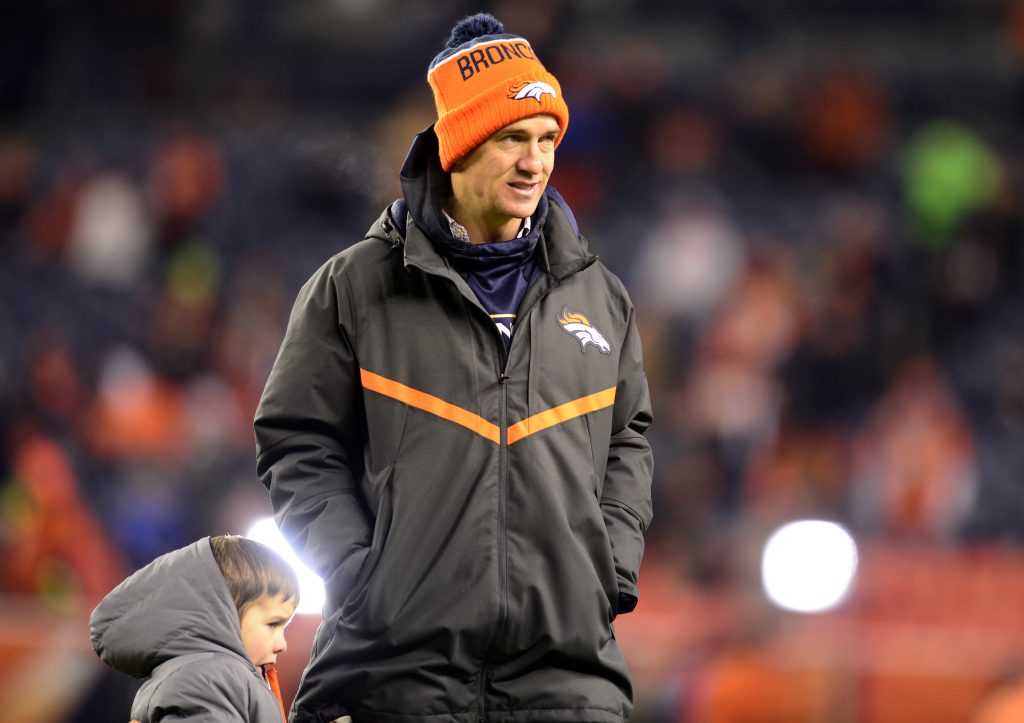
The Manning-Brady rivalry ended in the 2015 AFC Championship Game in Denver after a great defense coached by Wade Phillips put the pressure on Brady and repeatedly hit him in a 20-18 upset.
That was really the end of an era, and coaches like Ryan, LeBeau, Phillips, and others all soon moved on from the game.
Slowing Down the Kansas City Dynasty (2018-25)
It did not take too long for the NFL to replace the Manning vs. Brady rivalry with something fresh. The seeds were already being planted in 2017 when young offensive minds like Sean McVay (Rams) and Kyle Shanahan (49ers) became head coaches, leading to coaching trees that include the likes of Matt LaFleur (Packers), Kevin O’Connell (Vikings), Zac Taylor (Bengals), and Liam Coen (Jaguars).
But the new main character was Patrick Mahomes in Kansas City. From the moment he took over for Andy Reid’s offense in 2018, he started rewriting the record books right away. The 2018 Chiefs scored at least 26 points in every game, the only team to ever do that. Mahomes scored 31 points in the second half of the 2018 AFC Championship Game and lost after not getting to touch the ball in overtime with archaic rules.
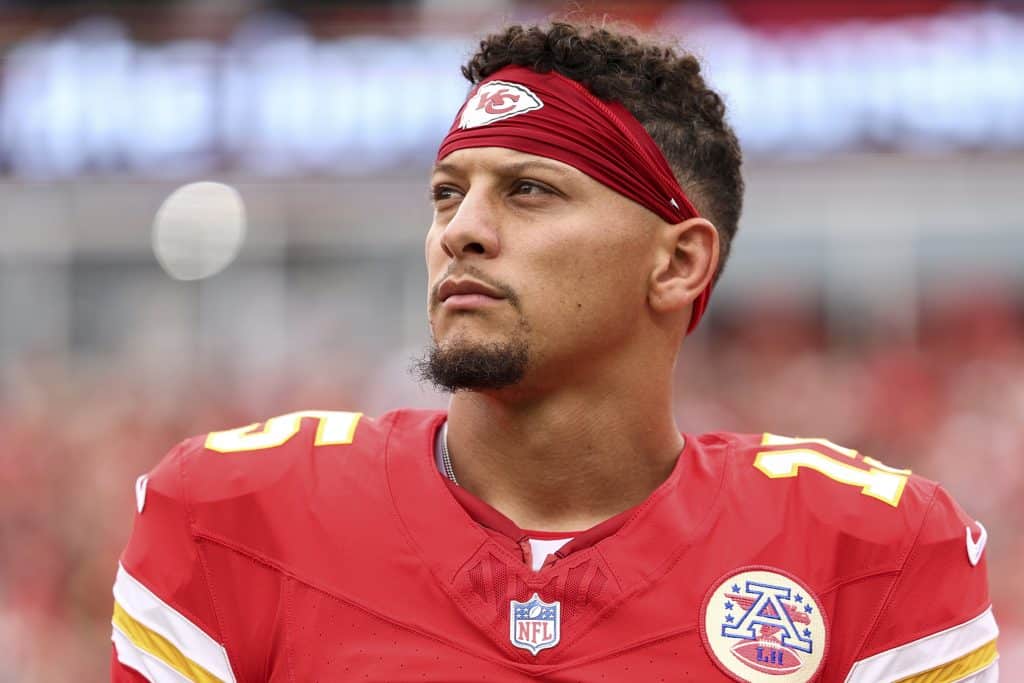
By 2019, Mahomes led the Chiefs to a Super Bowl win, coming back from a double-digit deficit in each playoff game to win by double digits in every round. This team was scary, because Mahomes was so consistent, explosive, and he could run himself out of trouble. They were never out of a game.
In 2020, the Chiefs lost one game with the starters going into the Super Bowl for a repeat opportunity. But there were some games in that 2020 season that showed the types of new defensive strategies from different minds that the Chiefs would have to deal with going forward in a league where nickel was the new base (instead of 3-4/4-3) and disguising things is all the rage:
- In the first game between the Chiefs and Bills to get the Mahomes vs. Josh Allen rivalry going, Sean McDermott’s defense barely sent any blitzes at Mahomes, a trend that would become the norm in future years.
- In a game against Denver with head coach Vic Fangio, a two-deep safety aficionado who had a lot of success as Chicago’s defensive coordinator in 2018, the Chiefs were held to 286 yards, their season low with Mahomes active.
- In an upset loss to the Raiders, Mahomes faced just a 5.9% blitz rate but was still pressured on 54.9% of his dropbacks by Maxx Crosby and company in a game where he scrambled for almost 500 yards behind the line, a precursor to Super Bowl 55.
Yeah, it’s crazy to think the 2020 Raiders showed the blueprint for Mahomes, but that’s what happened. It helped that the Chiefs lost left tackle Eric Fisher to a season-ending injury in the AFC Championship Game, causing Reid to play musical chairs at multiple positions for the Super Bowl in Tampa Bay.
But in Super Bowl 55, Mahomes was frequently pressured by a four-man rush from Tampa coordinator Todd Bowles, who played a ton of two-high safeties to take away the explosive plays to Tyreek Hill and company. With Tampa’s pass rush winning, the Chiefs lost 31-9 and did not score a touchdown. It was the first time in 54 starts that Mahomes lost by more than 8 points.
That game was like a Bat Signal to the rest of the NFL for dealing with the Chiefs or similar high-flying passing attacks that were doing so well in the NFL in 2018-20. After COVID subsided and fans returned to fill the seats in 2021, we saw points per game drop from a record-high 24.8 in 2020 to 23.0 in 2021 before two years of just under 22.0 points per game in 2022-23.
The Chiefs ended up trading Tyreek Hill in 2022, and while they still went to the next three Super Bowls, winning two of them, they were a changed offense. The explosives dropped, the mistakes went up with drops and penalties, and their games became such grinds. They still won their fair share of the close ones, but they couldn’t make it work at all in 2025 and had a losing season with Mahomes tearing his ACL in December.
It all goes back to Super Bowl 55 and that concept of pressure without blitzing. Not every old defense can pull that off, of course, but if you can, it’s such a huge advantage in dealing with these offenses. We’ve seen the Bengals had some success against Mahomes with a three-man rush in the second half of the 2021 AFC Championship Game, McDermott’s Bills have won five straight regular-season games against him with minimal blitzing (0-4 in the playoffs though), and Fangio crushed Mahomes’ offense in Super Bowl 59 with the Eagles in another game where not a single blitz was called.
Since 2018, there have only been 13 games where a quarterback had a blitz rate of under 2%. Three of those games were against Mahomes, including Super Bowl 59, his biggest home loss ever to the 2021 Bills (38-20), and his last game where he tore his ACL while playing with third-string tackles against the 2025 Chargers (16-13).
By the way, those 13 quarterbacks who were blitzed at a rate under 2% were 0-13 in those games. A strategy that works against Mahomes is going to work against any quarterback in this era. As we saw in Super Bowl 60, Mike Macdonald’s defense did not blitz much, but he was able to effectively rush a defensive back (namely Devon Witherspoon) for some of the best pressure plays against a young Drake Maye. In the end, Maye’s pressure rate was 52.8% despite only being blitzed 13.2% of the time, a differential of 39.6 percentage points.
Can any quarterback be expected to win under those circumstances when the pressure is that high and the blitz rate is so low? That’s why we created this PBJ stat to find out as exploiting an offensive line in the playoffs has become the best path to winning a Super Bowl in this era, and that’s not going to change as long as teams keep trying to get by with a glaring weakness up front. Not many teams can say they’ve built a strong, complete offensive line as it’s just too expensive to do that while hitting on the other pieces you need to succeed.
Finally, I found a stat that can unite fans of the Chiefs and Patriots instead of dividing them further.
Pressure-Blitz Jump by the Numbers
With the backstory complete, let’s start putting some numbers behind this. We are ib an era where most teams are blitzing under 30% of the time with some outliers like Brian Flores in Minnesota who likes to mix things up.
But pressure is a subjective stat, so it’s important to note all of the data going forward comes from NFL Pro from a total of 4,486 quarterback single-game performances in 2018-25 (playoffs included) where the quarterback threw at least 14 passes. A blitz is considered five or more pass rushers.
To calculate Pressure-Blitz Jump (PBJ), I simply used Pressure Rate minus Blitz Rate for each game. That’s it. A simple calculation of the rate of pressure above the rate of blitzes sent at the quarterback.
It sounds very basic, but the results stood out to me in a few areas.
- First, the average pressure rate (34.3%) and blitz rate (28.9%) have been fairly consistent on a season-to-season basis since 2018.
- In 2024, the average pressure rate (33.64%) and blitz rate (28.63%) produced a PBJ of 5.01%.
- In 2025, the average pressure rate (33.98%) and blitz rate (29.00%) produced a PBJ of 4.99%.
- PBJ was at its highest in 2018 (8.75%) and at its lowest in 2020 (2.80%).
- For the period of 2018-25, the average numbers in games the quarterback won: 32.04% pressure, 31.10% blitz, 0.94% PBJ.
- For the period of 2018-25, the average numbers in games the quarterback lost: 36.55% pressure, 26.71% blitz, 9.84% PBJ.
Those last two lines make sense. In games the quarterback lost, the defense did a better job at getting more pressure with less blitzing, producing a higher PBJ by almost 10 percentage points on average.
With some of the new stats that have popped up in the last decade, there is some confusion on whether you want to rank high or low in them since they are more measurements of style of play than quality of play. For example, passing stats like air yards per attempt (ADOT) or YAC% are questionable stats for if you want to have a number that’s at the top or bottom of the list, something you don’t run into with simple things like touchdown passes (high) or interceptions (low) or yards per attempt (high).
With PBJ, the goal is clear. The only confusion is making sure you’re talking about it from the right perspective of the defense or the quarterback as they’ll want the opposite outcome. If you’re a quarterback, you want a negative PBJ because that means they’re blitzing you at a higher rate than they’re pressuring you. If you’re a defense, you want the most positive number you can have for PBJ since it means your pressure rate is far outdoing your blitz rate.
Here are some real numbers to prove it with the records for the quarterback:
- When PBJ is positive (>0%), a pressure rate higher than the blitz rate, the quarterback is 1089-1632-11 (.401)
- When PBJ is neutral (0%), an equal pressure and blitz rate, the quarterback is 157-127-1 (.553).
- When PBJ is negative (<0%) , a pressure rate lower than the blitz rate, the quarterback is 962-503-4 (.656).
Quarterbacks are only winning 40% of the time with a positive PBJ compared to almost two-thirds of games when it’s a negative number. If it’s neutral (0%), that’s okay too as they’re still winning 55% of those games.
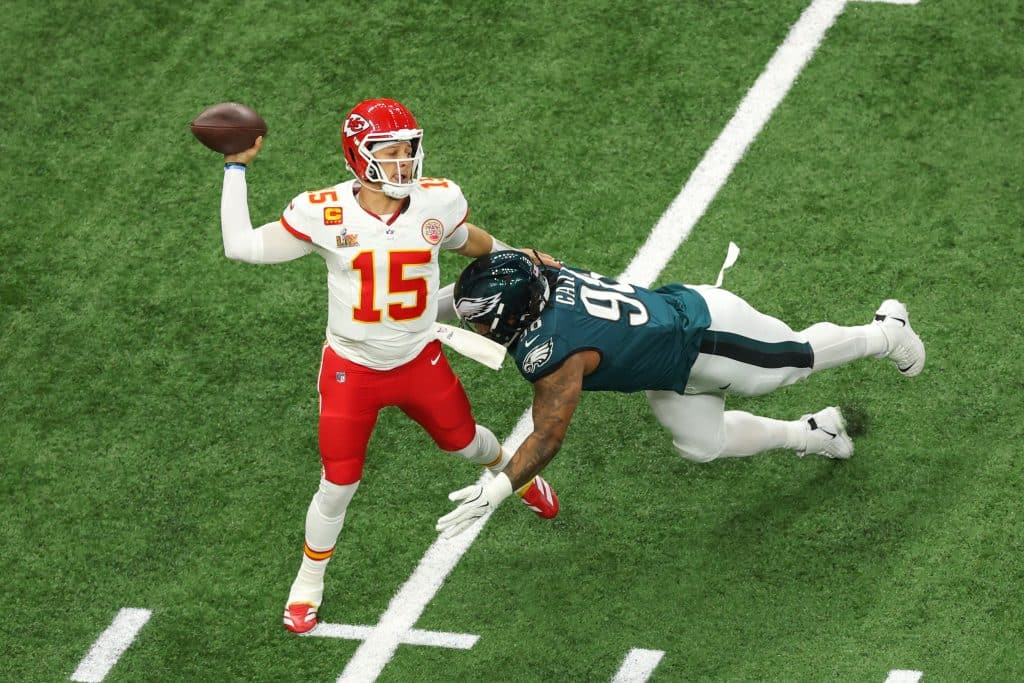
Something that impressed me is that the correlation between PBJ and the game’s scoring differential was minus-0.30. That’s decent for a stat that involves just two numbers on one side of the ball. The relationship is a negative number because when PBJ goes up on the quarterback, his team’s scoring differential will go down. Look at how that compares to the other metrics collected for these games and how they correlate with point differential:
- EPA/Dropback: Plus-0.62
- CPOE: Plus-0.32
- PBJ: Minus-0.30
- Pressure Rate: Minus-0.25
- Blitz Rate: Plus-0.16
- Tight Window Throw Rate: Minus-0.10
- Average Separation: Plus-0.08
- Average Time to Throw: Minus-0.04
- Deep Pass Rate: Plus-0.01
- Air Yards/Attempt: Minus-0.01
EPA/dropback will still do the best job of correlating with the scoreboard, but PBJ looks fine in this list of statistics.
What’s the Sweet Spot for Pressure, Blitzing, and PBJ Rates?
In a perfect game for a defense, you’d get pressure on every play and not blitz once, but we know that’s not realistic. So, what are some realistic goals to set for these numbers to likely produce a winning effort?
For Quarterback Pressure Rates (2018-25):
- Since 2018, quarterbacks who aren’t pressured more than 20% of the time win 71.4% of their games.
- Quarterbacks who are pressured between 20% and 30% are still 688-480-6 (.589), so we need to go higher.
- Quarterbacks who are pressured over 60% of the time are 16-27 (.372), but that’s only a small sliver of games in the sample, so that’s not realistic either.
- Quarterbacks who are pressured no more than 35% of the time win 58.3% of their games.
- Highest quarterback pressure rates among quarterbacks with min. 50 games since 2018: Daniel Jones (39.7%), Kirk Cousins (39.2%), Deshaun Watson (38.4%), Sam Darnold (38.4%), and Ryan Tannehill (38.1%).
- Lowest quarterback pressure rates among quarterbacks with min. 50 games since 2018: Ben Roethlisberger (25.6%), Tom Brady (26.5%), Tua Tagovailoa (26.9%), Aaron Rodgers (27.3%), and Kyler Murray (27.9%).
For a defense to feel good about its pressure rate likely leading to a win, you’re looking at a number at least 35%. Even at 40%, you’ll find an outlier like Brock Purdy, who is 12-4 (.750) with the 49ers when he’s pressured over 40% of the time, besting that of Mahomes (12-12) and Allen (15-15).
For Blitz Rates (2018-25):
- Quarterbacks are only 66-163-1 (.289) when the blitz rate is single digits by a defense, so that’s a strong argument for minimal blitzing if you can pull it off with the right mixture of a four-man rush and good coverage.
- When the blitz rate is no more than 30%, quarterbacks still have a losing record, but their win rate is up to 47.7%.
- Defenses that blitz over 30% of the time only win 42.3% of the time.
- Quarterbacks win 59.5% of the time against defenses with a blitz rate above 40%.
- Highest blitz rates among quarterbacks with min. 50 games since 2018: Ryan Tannehill (35.0%), Jalen Hurts (34.6%), Jordan Love (34.5%), Jimmy Garoppolo (33.6%), and Lamar Jackson (33.4%).
- Lowest blitz rates among quarterbacks with min. 50 games since 2018: Patrick Mahomes (20.7%), Joe Burrow (22.6%), Philip Rivers (22.9%), Tua Tagovailoa (23.8%), and Tom Brady (24.0%).
Unless you’re playing a very inexperienced quarterback or a sack magnet, you’ll likely want to keep your blitz rate under 30% and even under 20% against the best passers.
For Pressure-Blitz Jump (2018-25):
Here are some fun nuggets:
- The highest PBJ in a game since 2018 belongs to Arizona’s Josh Rosen in his 2018 rookie year in a 26-14 loss to the Chiefs. His PBJ was 59.1% after a pressure rate of 65.9% and blitz rate of 6.8%.
- The highest PBJ in a win since 2018 belongs to Ryan Tannehill for the 2022 Titans after he had a 56.6% PBJ in a 19-10 win against the Colts.
- Tannehill also has the lowest PBJ in a game a quarterback started since 2018 with a -52.4% PBJ against the 2021 Dolphins (23.8% pressure rate, 76.2% blitz rate in the final game before Brian Flores was fired in Miami).
- The lowest PBJ in a game was when Tyson Bagent came off the bench to replace Justin Fields for the 2023 Bears against the Vikings (also a Flores defense) and his PBJ was -53.4% (33.3% pressure rate, 86.7% blitz rate).
- Going back to the MVP discussion last week, Justin Herbert against the Eagles (22-19 overtime win) in 2025 became the only quarterback since 2018 to win a game his team allowed more than 16 points in with a PBJ above 40.0%. All other quarterbacks were 0-33 in such games.
Looking at the extreme ends of PBJ leaves no doubt which side of the coin you’d rather be on:
- In 44 games with a PBJ above 40%, the quarterback is 10-34 (.227).
- In 35 games with a PBJ below -35%, the quarterback is 24-11 (.686).
But those numbers might even be underselling it.
- When PBJ is 30% or higher, the quarterback is 53-187 (.221) and his team averages 17.3 points per game.
- When PBJ is 20% or higher, the quarterback is 228-582-1 (.282) and his team averages 19.0 points per game.
- When PBJ is 10% or higher, the quarterback is 606-1189-7 (.338) and his team averages 20.0 points per game.
- When PBJ is -10% or lower, the quarterback is 495-212-2 (.700) and his team averages 26.6 points per game.
- When PBJ is -20% or lower, the quarterback is 171-45 (.792) and his team averages 27.9 points per game.
- When PBJ is -30% or lower, the quarterback is 55-15 (.786) and his team averages 28.3 points per game.
If you can get the blitz rate under 20% and the pressure rate above 35%, creating a PBJ of at least 15 percentage points, then those quarterbacks lose 74% of the time and only average 18.9 points per game.
The PBJ Impact on the NFL Playoffs

Let’s be honest. You can probably blitz the heck out of a fifth-round rookie like Shedeur Sanders (Browns) and not worry about the consequences. In fact, that’s why Dick LeBeau’s zone-blitz scheme was always so effective against bad quarterbacks like the ones the Browns and Bengals had for years while it struggled to slow down the likes of Dan Marino, Tom Brady, Aaron Rodgers, etc.
The NFL playoffs are going to be the ultimate judge of these strategies as that’s where you expect the best quarterbacks going up against the best defenses. Throw in a bye week for the No. 1 seeds and an extra week to prepare for the Super Bowl, and unique strategies should always pop up in the playoffs and have done so this era as tracked by NGS.
We have data on 198 quarterback performances in the playoffs since 2018 from NFL Pro. Using PBJ with these games is very telling:
- Quarterbacks with a PBJ above 25% in the playoffs since 2018 are 1-19 (.050) in those games.
- Only Drew Brees (28.2% PBJ) got a 21-9 win over the 2020 Bears during COVID.
- Meanwhile, quarterbacks with a PBJ below -12.5% in the playoffs since 2018 are 14-6 (.700) in those games.
- Quarterbacks with a positive PBJ in the playoffs are 48-71 (.403) since 2018.
It’s also likely not a coincidence that the four quarterbacks with the highest PBJ in the Super Bowl in this period were 0-4 in those games, including the three blowout losses:
- Drake Maye’s Super Bowl 60 loss vs. Seattle is the third-highest PBJ (39.6%) in a playoff game since 2018.
- Patrick Mahomes’ Super Bowl 59 loss vs. Philadelphia is the fourth-highest PBJ (38.1%) in a playoff game since 2018.
- Mahomes’ Super Bowl 55 loss vs. Tampa Bay is the ninth-highest PBJ (32.2%) in a playoff game since 2018.
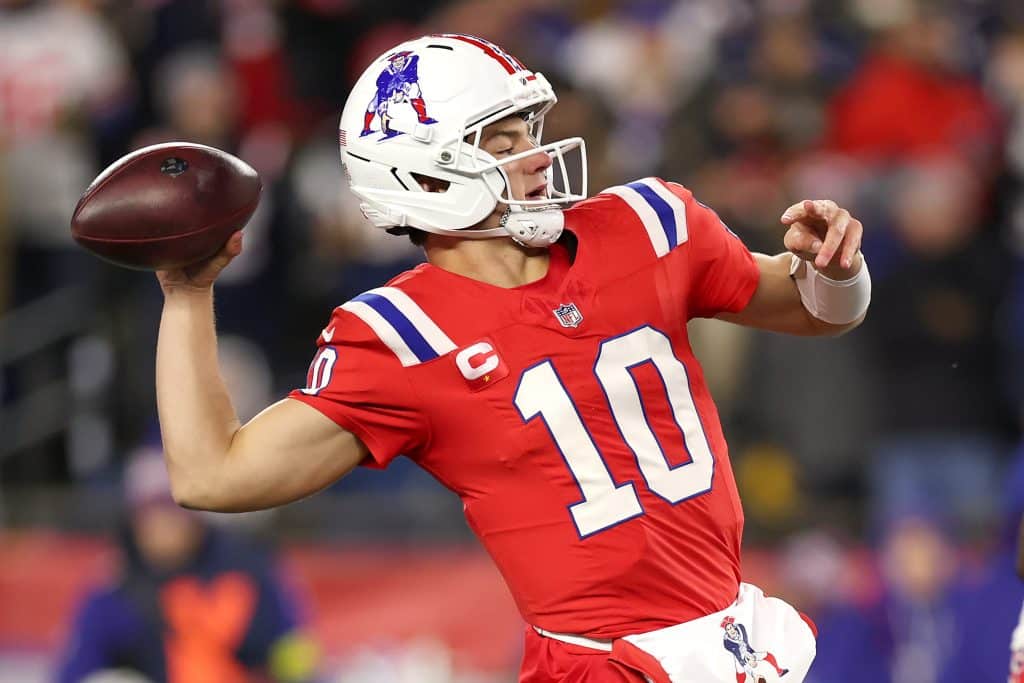
This is not to say Mahomes and Maye share no responsibility for their Super Bowl losses not going well. Performance under pressure can be a defining quarterback metric where the great ones shine the brightest. But when the PBJ is that high against the top competition from the other conference on that stage, I’m not sure any quarterback in any era can be expected to win such a game.
Finally, if you used PBJ as a team metric by subtracting the offense’s PBJ from the defense’s PBJ, then the 2025 Seahawks (+23.1%) and 2025 Rams (+22.4%) rank No. 1 and No. 3 among all 256 teams in the regular season since 2018. You know, the teams that played in the Game of the Year in Week 16 and the Real Super Bowl in the 2025 NFC Championship Game. Not bad.
Maybe this 2025 NFL season isn’t the best one to take sweeping generalizations from, but at the end of the day, teams who never blitz in a Super Bowl are 6-0 now, and we have almost a decade of data showing it’s advantageous to not have to blitz much.
The Super Bowl will always be the biggest stage to have a weakness exploited, but that should stress finding five offensive linemen who are not bad players more than finding five good linemen. Invest more in pass rushers so you don’t have to call as many blitzes. That’s where the game has been heading. Winning up front makes everything easier and keeps the numbers in your favor on defense.
That is how you win on defense in today’s NFL.
Related Articles:
- After a Close NFL 2025 MVP Vote, What Do People Even Value in a Quarterback These Days?
- Lessons from the 2025 NFL Season, 2026 Storylines, and the Early Super Bowl 61 Odds
- Scott’s Seven NFL Picks: Super Bowl 60
- Super Bowl 60 Preview: Seattle Seahawks vs. New England Patriots
- Sam Darnold, the Patriots, and the Curse of MetLife Stadium (A Super Bowl 60 Story)
- The Worst Super Bowl Teams in NFL History: Are the 2025 Patriots in the Mix?
- The 2026 NFL Coaching Cycle: Grading New Hires and the Best Choices to Fill the Final Openings
- 2025 NFL Fraud Alert Rating: Should We Trust the Bears and Patriots in the Playoffs?
- 2025 Final NFL Quarterback Rankings: Matthew Stafford Is the MVP
- 2025 NFL Award Races: Final Quarter Look at Stafford vs. Maye for MVP, Coach of the Year, and the Myles Garrett vs. Micah Parsons Debate
- Who Are the Super Bowl Contenders and Pretenders in This Wild 2025 NFL Season?
- 2025 NFL Award Races: Why Patrick Mahomes vs. Josh Allen Is Not the Game to Decide MVP, and the Daniel Jones Double Standard
- 2025 NFL Award Races Through the First Quarter: Are We Headed Towards Josh Allen vs. Patrick Mahomes for MVP?
- Patrick Mahomes Turns 30: The Best There Is, the Best There Was, the Best There Ever Will Be?
- 2025 NFL Predictions: Who Makes It to Super Bowl LX?
- 2025 NFL Award Nominees and Best Bets: Can We Get a Good and Logical MVP Race?
- Philadelphia Eagles 2025 NFL Season Preview and Picks: Did Philly Crush One Great Dynasty to Start Its Own?
- Kansas City Chiefs 2025 NFL Season Preview and Picks: Time to Reinvent the Offense Again